Tongue of the Mountain

Keeping the mountain's tongue alive

I am a lover of languages. Of all the tongues I have heard across ninety countries, the one that moves me most is still Atayal — beautiful, understated, with a mountain inside every word. One of my wishes is that our language lives on and travels: learned, spoken and heard by more people.

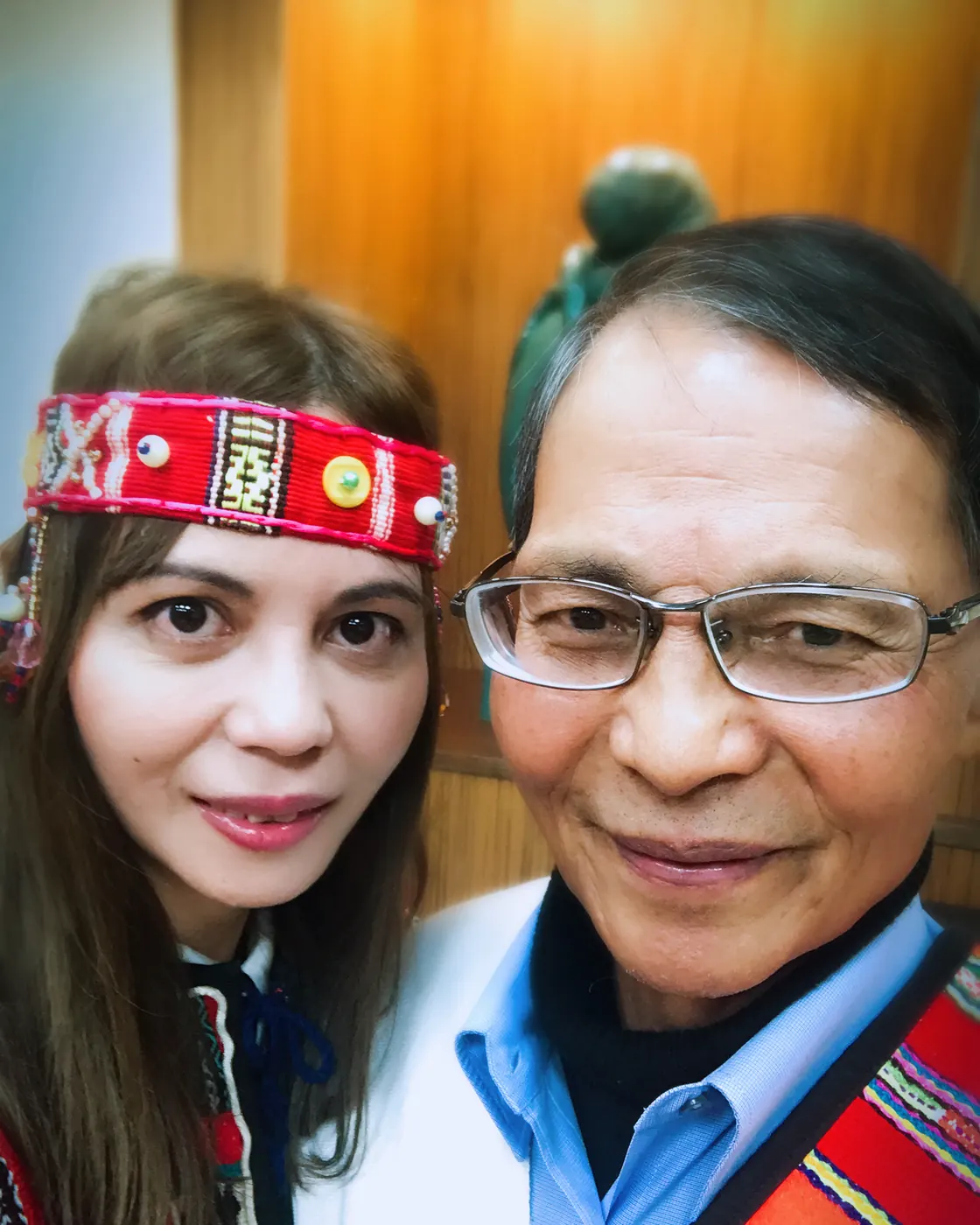
Yaba and Maya in traditional Atayal dress
Traditional Atayal dress · Yaba and Maya
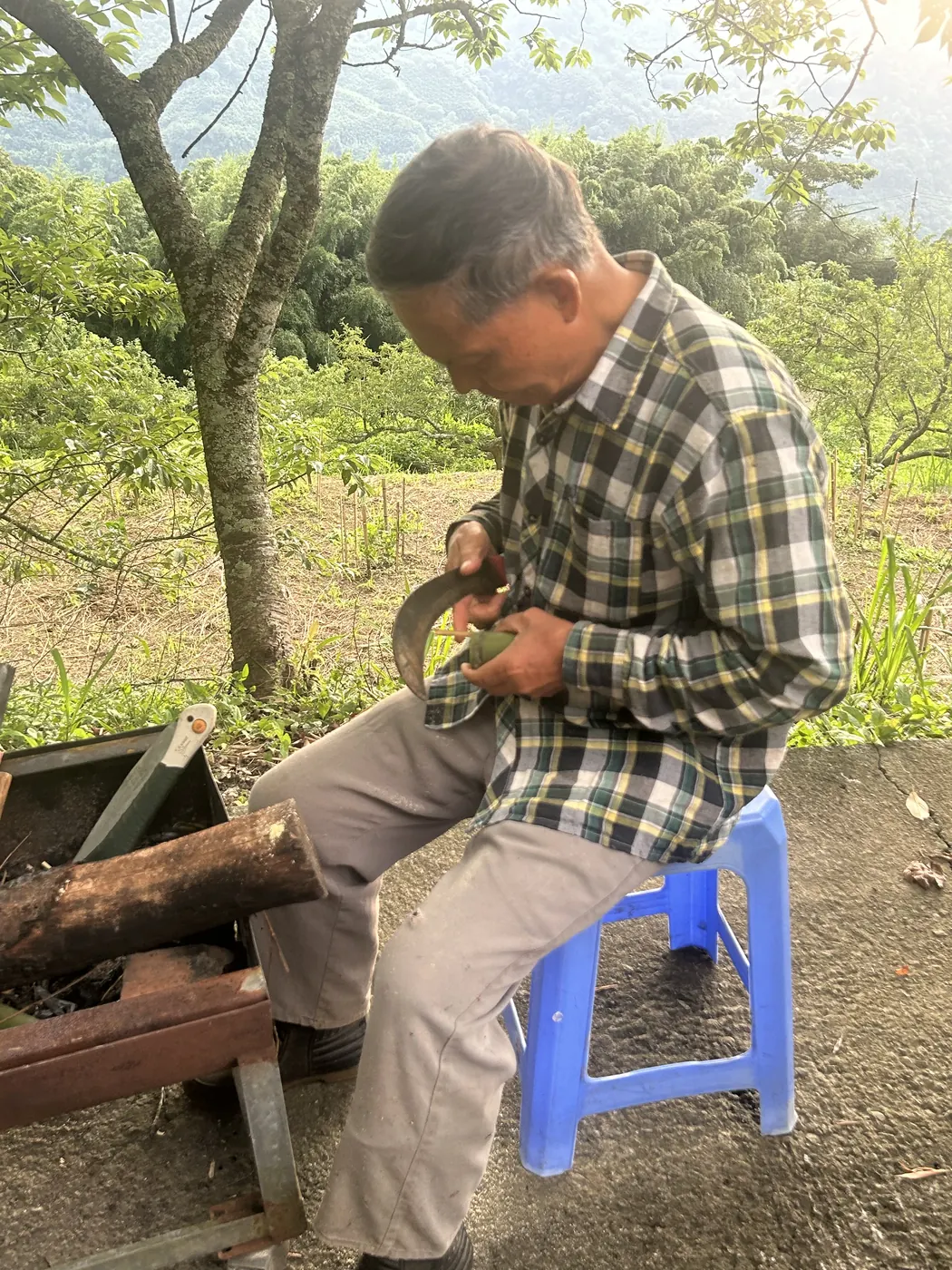
Yaba seated at the edge of the orchard, carving a bamboo cup with a mountain knife, fruit trees and distant peaks behind him

The teacher

Learning with Yaba

Yaba is my father, and a certified teacher of the Atayal language. He speaks the Ts'ole' Atayal (澤敖利泰雅語) of Daxing village in Tai'an — the language of our family.

After he retired to the mountain, he sat down with the village elders, recorded the way Daxing speaks, and turned it into a textbook so the young people of the village would have something to learn from. He teaches the way he grows fruit trees: without hurry. A greeting, a word, a short exchange — slowly, until it comes naturally.

Variety
Ts'ole' Atayal (澤敖利泰雅語), as spoken in Daxing village
Certification
National Indigenous language proficiency, upper-intermediate (中高級) · certified language teacher
Textbook
Ts'ole' Atayal of Daxing Village, supplementary materials, levels 4–5 — compiled with the village elders (Miaoli County Indigenous Education Resource Centre, 2023)
Atayal name
Yumin Hawbin · chief of Daxing village, Tai'an
Lessons
Small online classes · on the mountain (in preparation)

About Atayal

One language, several ways of speaking it

Atayal is one of the Indigenous languages of Taiwan, and the national certification recognises six varieties of it. Ts'ole' is one of them — the one Yaba has spoken since he was a boy. Even within Ts'ole', each village speaks a little differently: Daxing has kept more of the old sounds, and a word can change from one village to the next.

Its sound is clear and its sentences are understated: much is left unsaid, and a single word can carry it. Take lawkah — it means take heart, it means hello, and at its root it means strong. Or saluwan — daybreak, the early morning — which is now the name of our farm.

The learning platform

What the platform will hold

We're putting it together piece by piece, and opening each part as it's ready. To be the first to know, tell us on LINE.

In preparation

Beginner course

Small online classes, beginning with greetings and introducing yourself, taught by Yaba himself.

In preparation

Word cards & audio

The words of everyday life, each recorded in Yaba's voice — listen and repeat whenever you like.

Ask on LINE

Lessons on the mountain

Come up and learn in the orchard and the bamboo grove: words stick when your hands are busy.

In preparation

Little lessons

One word or one sentence pattern at a time, slowly growing into a dictionary of the mountain.

A first few words

The words this mountain says most often

  • lawkahtake heart · helloAt its root, ‘strong’. The first word when we meet, and a blessing when we part. Written lokah in most other areas.
  • mhway su'thank youWhat you might say when a box of plums arrives.
  • ragiyaxmountainWhere all of our stories begin.
  • yaba · yayafather · motherWhich is why I call him Yaba.
  • ItayalAtayal · a personThe name we call ourselves; also written Tayal.
  • gaga'ancestral teaching · the way things are doneThe rules handed down by our elders: how to treat the mountain, and one another.

Written in the Ts'ole' Atayal of Daxing village, following the textbook Yaba compiled; he is still checking every spelling. Message us on LINE and we'll send you the pronunciation.

Twenty words from the mountain

Twenty words, twenty things the mountain says

Every word and sentence here comes from the Ts'ole' textbook Yaba compiled with the elders of Daxing village. Learn these, and you'll understand half of what you hear on the way up.

Mountain & water

  1. ragiyaxmountainpayux la ragiyax na Itayal.The Atayal have many mountains.
  2. Papak Wa'aMt. Dabajian, the Atayal's sacred mountainPapak Wa'a hani ga babawi subalay na ragiyax.Papak Wa'a is a very high mountain.
  3. alangvillagekiya la ragiyax alang ta uziy aw?Does our village have mountains too?
  4. luliyungriver · streamabagan lga mutu rahuyal la usiya luliyung.In summer the river truly runs high.

Weather & seasons

  1. wagituxsunniyal makayahtuw wagitux la aw?Has the sun come out?
  2. buyatingmoonmauwas takay lga, makyahtu ku buyating la.When the frogs sing, the moon comes out.
  3. uwalaxrainniyal mauwalax ku tanux.It's raining outside.
  4. abagansummerabagan la, pahngi sami na anruyux pahngian la.It's summer now, and we're on our long holiday.
  5. mahulai'wintersikila ga, mahulai' lga, tikuy la usiya i luliyung la.But in winter, the river runs low.
  6. mahu abawautumn (literally: the leaves fall)mahu abaw la, niyal matanah ralu la.Autumn — the persimmons have turned red.

In the orchard

  1. mamayahfield · farmlandyaba mu ga papatayuwaw mamayah, makaruyux matayuwaw mamayah karariyax.My father is a farmer; every day he works hard in the fields.
  2. kinaluhharvestte tiugal ga, muwana payux la kinaloh suku kayal hani.The third wish: may this year's harvest be plentiful.
  3. lumamuto pickwayal lumamu su ralu ku utux sali ni Tuyaw.Tuyaw's family went to pick persimmons.
  4. ta'lito dig bamboo shootsmusa sami ta'li ki amisuyan mu tamalung.My brother and I are going to dig bamboo shoots.
  5. yayawabasketti ku yayawa naha ga ini kabusiya ru sipun la.Their baskets were full in no time.

Family & heart

  1. yaki · yutasgrandmother · grandfatheryaki, pa'saw ta riyax hinbaka'an su.Grandma, happy birthday!
  2. inlunganheart · a wishtiugal ku inlungan niya.She made three wishes.
  3. ma'asglad · happynaki ma'as ku inlungan ni yaki.So that Grandma's heart is glad.

On the road up

  1. pausayexcuse me · may I askpausay misu tikay, ti inu ku Papak Wa'a?Excuse me — where is Papak Wa'a?
  2. panabacarefulhumakay tuiy ga panaba ki.Walk carefully.

Counting to ten

  1. 1utux
  2. 2sazing
  3. 3tiugal
  4. 4sipayat
  5. 5zimagan
  6. 6matayu
  7. 7mapitu
  8. 8masapat
  9. 9maisu
  10. 10magalapu

The textbook counts its lessons this way: te utux lalapagan, lesson one; te sazing lalapagan, lesson two …

How Daxing village says it

It is all Ts'ole', yet Daxing often says a word differently from Zhongxing, Meiyuan, Xiangbi or Shilin villages nearby — Daxing has kept a syllable the others have dropped. A few of the examples Yaba gives in the textbook's preface:

EnglishDaxingOther villages
bodyhihihi
fishusiyuxsiyux
stoneuyamayyamay
sugarcanetiububilus
salttimutmuyux

Source: Ts'ole' Atayal of Daxing Village (Maralas and Matabalay area), supplementary teaching materials, levels 4–5 — compiled by 陳欽亮 Yumin Hawbin with the elders of Daxing village and published by the Miaoli County Indigenous Education Resource Centre (2023). Spellings follow the book and are still being checked by Yaba; for pronunciation, message us on LINE.

My wish

Language is the lightest way we have of carrying the mountain far: no box, no truck — one sentence, and it travels. I hope that one day you, too, can say lawkah to Yaba in Atayal.

— Maya

Our LINE official account is being set up — once it's live, these buttons will take you straight there.